
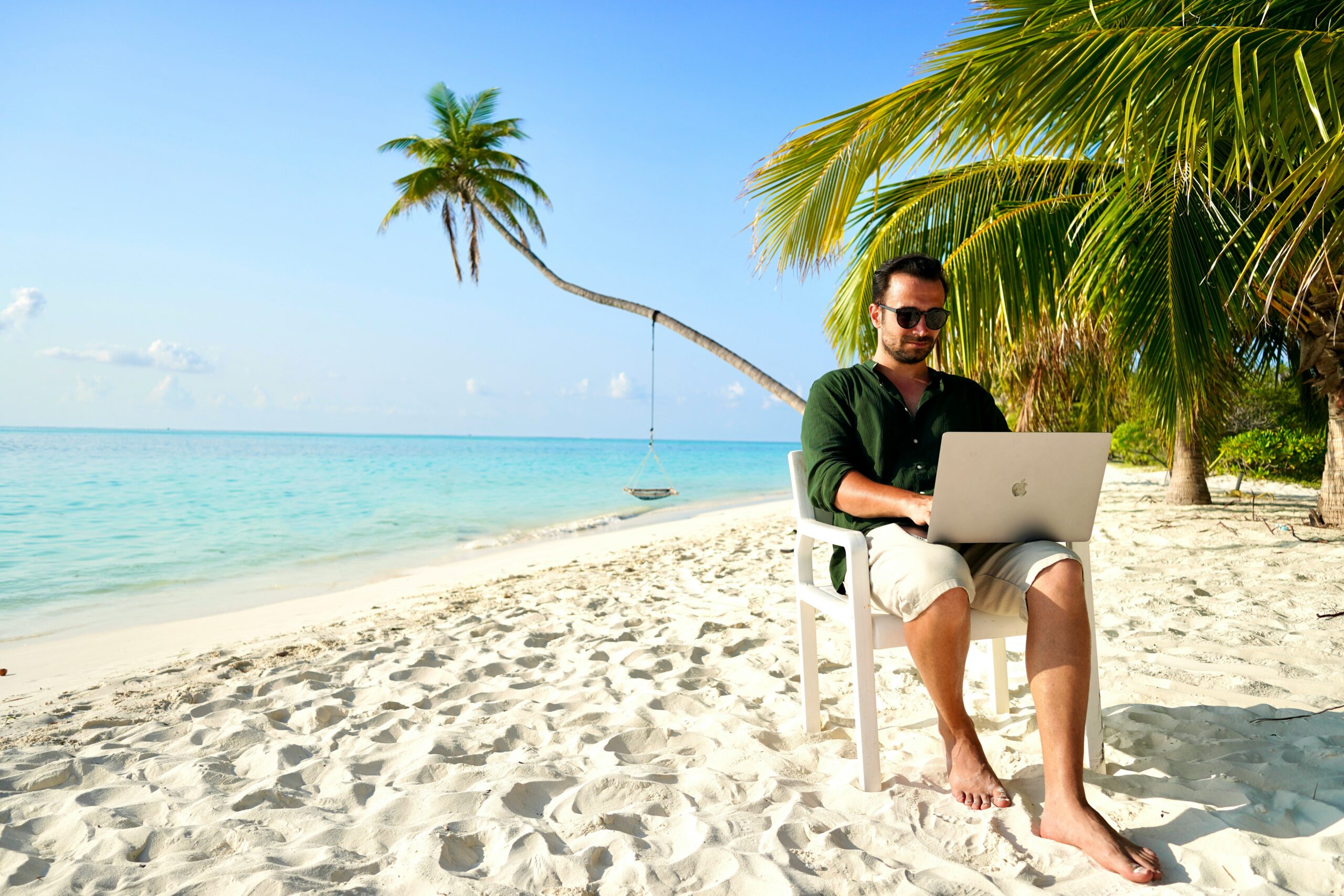
The idea of “digital nomadism” has grown significantly in popularity in recent years, changing how people view travel & employment. People are no longer restricted to a single location thanks to technological advancements & the growth of remote work opportunities. Alternatively, they can continue to pursue their careers while traveling, resulting in a lifestyle that blends career satisfaction with personal exploration. The COVID-19 pandemic has accelerated this change by compelling many businesses to implement remote work policies, enabling workers to understand that productivity is not limited to a traditional office setting.
Digital nomadism is a fundamental shift in how we view work-life balance, not just a fad. Although working from a café in Lisbon or a beach in Bali is alluring, there are drawbacks and issues of its own. As more people adopt this lifestyle, it becomes crucial to comprehend the complexities of managing finances, finding remote work, and navigating legal ramifications. This article explores a number of facets of digital nomadism and offers advice and tactics for anyone wishing to take on this thrilling adventure. Getting a remote job that fits your lifestyle & skill set is the first step towards becoming a digital nomad. Many platforms, including FlexJobs, We Work Remotely, and Remote Dot Co., are dedicated to remote work opportunities.
If you’re looking for innovative ways to make money online while traveling, you might find inspiration in a related article that discusses the impact of stepping away from social media on business revenue. In the article, the author shares their experience of deleting social media for 30 days and how it led to a significant increase in business revenue. This insight can be particularly valuable for digital nomads seeking to optimize their online ventures. To read more about this intriguing journey, check out the article here: I Deleted Social Media for 30 Days and My Business Revenue Doubled.
These websites make it simpler for job seekers to locate positions that meet their needs by curating listings from businesses that value flexible work arrangements. Also, networking on sites like LinkedIn can result in useful contacts and employment opportunities. Participating in remote work-focused communities can also reveal information about businesses that are renowned for their policies that support remote work.
But not every remote position is the same. It’s important to stay away from jobs that offer high compensation but have unreasonable demands or abusive behavior. For example, some businesses might pay attractive wages but demand constant availability from their staff, which can result in burnout and discontent.
It’s important to do extensive research on possible employers; check reviews on websites like Glassdoor or ask current or former employees for their opinions. You can steer clear of obstacles that could impede your experience as a digital nomad by being aware of the workplace culture & expectations. Freelancing provides a flexible alternative to traditional employment for many aspiring digital nomads. In addition to having expertise in your chosen field, developing a successful freelance career also requires knowing how to effectively market yourself. Freelancers have access to platforms like Upwork, Fiverr, & Freelancer that allow them to connect with clients and display their skills.
If you’re looking to make money online while traveling, it’s essential to understand the various factors that can impact your success. One interesting aspect to consider is how personal habits, such as alcohol consumption, can influence your productivity and decision-making. For insights on this topic, you might find it helpful to read about the hidden link between alcohol and your struggling business in this article. By managing your lifestyle choices effectively, you can enhance your ability to earn while exploring new destinations. Check out the article here for more information.
| Method | Potential Earnings | Flexibility |
|---|---|---|
| Freelancing | Varies | High |
| Dropshipping | Varies | High |
| Affiliate Marketing | Varies | High |
| Online Courses | Varies | High |
| Remote Work | Varies | High |
Making a strong portfolio that showcases your finest work is crucial because prospective clients frequently base their choices on the caliber of your prior work. The success of freelancing is largely dependent on networking. Referrals and partnerships can result from interacting with other independent contractors & possible clients on social media sites or in industry-specific forums. Developing your negotiating abilities is also essential; being able to confidently discuss rates can have a big impact on your earnings.
Maintaining a healthy work-life balance while traveling also requires setting clear boundaries regarding your availability and workload. Diversifying your sources of income can help you succeed as a digital nomad by ensuring financial security and stability. It can be dangerous to rely only on one source of income, particularly in the volatile gig economy. Examine a variety of options, including part-time remote work, freelancing, and even launching an internet company.
For example, if you’re a graphic designer, you might sell digital goods like templates or stock photos on sites like Creative Market or Etsy in addition to taking on freelance work. Putting money into your skills can also increase your earning potential. Your expertise can be improved & your marketability to clients or employers increased with online courses and certifications. Also, think about taking advantage of passive income opportunities like affiliate marketing or using your expertise to create an online course. Your nomadic lifestyle can be supported by a more robust financial foundation that you build by combining different sources of income.
For digital nomads, who frequently deal with fluctuating incomes and different living expenses in various locations, effective money management is essential. You can monitor spending and establish financial objectives while on the go by using budgeting tools like Mint or YNAB (You Need A Budget). You can monitor cash flow, classify spending, and modify your budget based on your current circumstances with the help of these applications. Also, setting up an emergency fund is crucial for handling unforeseen costs that might occur while traveling.
Prior to starting your journey, try to save at least three to six months’ worth of living expenses. With this financial safety net, you can concentrate on your work without having to worry about money all the time. Also, to cut expenses when handling your finances overseas, think about utilizing travel-friendly banking options like online banks or accounts with low foreign transaction fees. The unpredictability of income is one of the biggest obstacles that digital nomads must deal with. Workload and payment schedule fluctuations are common for independent contractors and remote workers, which can result in unstable finances.
It’s critical to take a proactive approach to money management in order to reduce this danger. Evaluate your sources of income on a regular basis to spot patterns. This will help you foresee slow months & make appropriate plans. During uncertain times, it can be helpful to create a comprehensive financial plan with both short-term and long-term objectives.
Building resilience against income fluctuations can be facilitated by setting aside a portion of each paycheck for savings. Diversifying your clientele can also lessen reliance on any one source of revenue, making it simpler to weather times of low demand. Your special abilities and experiences as a digital nomad can be useful assets that can be made profitable in a number of ways.
Many businesses are willing to pay for specialized knowledge that can help them grow or solve specific problems, so think about providing consulting services in your area of expertise. For instance, if you have experience in marketing, you could offer strategic counsel to new businesses trying to build their brand. Moreover, you can make money by producing content that is relevant to your area of expertise. Establishing a blog or YouTube channel enables you to develop an audience while sharing insights.
You can look into monetization options like affiliate marketing partnerships or sponsored content once you have a following. You can generate extra income streams to supplement your main sources of income by creatively utilizing your skills. For digital nomads who want to be financially independent while traveling, passive income is an alluring option. This kind of income gives you a safety net during times when you might not be able to take on new projects by enabling you to make money without actively working for it.
Investing in stocks or real estate is a common way to earn passive income, but these choices need careful consideration & preparation. Making digital goods like e-books, online courses, or printables that can be sold repeatedly without further work after the initial creation process is another way to generate passive income. Online sales of these goods are made simple by platforms like Teachable or Gumroad. Also, think about affiliate marketing by using your blog or social media platforms to promote goods or services. Receiving commissions from sales made as a result of your recommendations can greatly expand your portfolio of passive income.
Digital nomads must carefully navigate the many legal & tax issues that come with working remotely while traveling abroad. Every nation has its own rules about taxes and work permits for foreign workers, and breaking these rules can have dire repercussions. Before traveling to a new country, it is crucial to learn about the requirements for obtaining a visa; some countries provide special visas intended for remote workers. Another important factor to think about is tax obligations. You might still have to file taxes even if you live overseas, depending on the tax regulations in your home country. Comprehending international agreements on double taxation can help avoid paying taxes on the same income twice.
You can get clarity on how to handle your tax obligations while taking advantage of the flexibility of working remotely by speaking with a tax expert who specializes in international taxation. For digital nomads who want to find fulfillment in both aspects of their lives, finding a balance between work obligations and travel experiences is essential. Creating a schedule that takes into account both work and leisure time can boost output while enabling pleasurable travel experiences. You can devote time to work without compromising opportunities for adventure if you set specific working hours each day.
Also, managing tasks efficiently while on the go can be facilitated by using productivity tools like Trello or Asana. You can easily collaborate with clients or team members and visually arrange projects with these platforms. Making self-care a priority is equally crucial; making sure you take breaks and partake in rejuvenating activities will eventually improve your ability to concentrate at work. For those who are prepared to accept its rewards and challenges, the path of digital nomadism offers unmatched freedom and flexibility. People can pursue rewarding careers while traveling the world by learning how to locate remote work opportunities, handle money wisely, & deal with legal issues.
Traveling and earning money online opens doors to new experiences and personal development that traditional employment frequently cannot. In the community of digital nomads, exchanging information and tactics is becoming more crucial as more people embrace this way of life. People can flourish in this dynamic setting where work and adventure collide by helping one another through shared experiences & insights. Adopting a digital nomad lifestyle not only changes our perspective on work but also improves our lives by allowing us to connect with people from all over the world and experience a variety of cultures.